Introduction
In the modern financial landscape, risk rarely announces itself in advance. It often emerges quietly, hidden between assumptions and reality, between what we believe is protected and what actually is. One such overlooked risk exists in the gap between asset value and financial obligation. This is precisely where gap insurance plays a critical role.
As a CEO with years of experience in financial strategy, consumer protection, and risk management, I have observed that many individuals believe they are fully insured—until a loss occurs and they discover otherwise. Gap insurance, often underestimated or misunderstood, acts as a financial safety belt. It does not replace primary insurance; instead, it protects against the financial shock that primary coverage may leave behind.
This article explores gap insurance as a strategic financial tool, explaining its purpose, value, and role within comprehensive financial planning from an executive leadership perspective.
Understanding the Concept of Gap Insurance
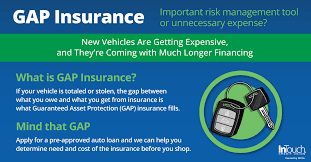
Gap insurance is designed to cover the difference—or “gap”—between the outstanding financial obligation on an asset and its actual market value at the time of loss. This situation commonly arises with financed or leased assets that depreciate faster than the repayment schedule.
The most familiar application of gap insurance is in vehicle financing. However, the underlying principle applies broadly across financial planning wherever depreciation, leverage, and risk intersect.
From a CEO’s viewpoint, gap insurance addresses a structural weakness in traditional insurance coverage: the assumption that market value alone is sufficient protection.
Why the Gap Exists
To understand the importance of gap insurance, one must first understand why the gap exists.
Assets such as vehicles, equipment, and certain consumer goods depreciate rapidly—often faster than loan balances decline. In the early years of financing, loan obligations frequently exceed the asset’s resale or market value.
If a total loss occurs during this period, standard insurance typically pays only the current market value. The remaining balance becomes the individual’s responsibility. Gap insurance exists to eliminate this financial exposure.
Gap Insurance as a Risk Management Tool
Risk management is not about eliminating risk entirely; it is about identifying vulnerabilities and managing them intelligently. Gap insurance serves as a targeted risk management solution.
It protects against:
- Unexpected financial liabilities
- Sudden negative equity
- Disruption of cash flow
- Forced liquidation of savings or investments
From an executive perspective, this form of protection enhances financial resilience by stabilizing outcomes in adverse scenarios.
Common Scenarios Where Gap Insurance Applies
Gap insurance is most commonly associated with auto loans and leases, but its relevance extends beyond this narrow definition.
Typical scenarios include:
- New vehicle purchases with minimal down payments
- Long-term auto loans
- Leased vehicles
- Financed business equipment
- Assets with high depreciation rates
In each case, gap insurance acts as a buffer between obligation and value.
Gap Insurance and Personal Financial Stability
Personal financial stability depends not only on income and savings, but also on the ability to absorb shocks without derailing long-term plans. Gap insurance contributes to this stability by preventing sudden liabilities.
Without gap insurance, individuals may be forced to:
- Use emergency funds prematurely
- Take on additional debt
- Delay financial goals
- Compromise investment strategies
As a CEO, I view gap insurance as a defensive mechanism that preserves strategic financial momentum.
Gap Insurance Versus Traditional Insurance
Traditional insurance focuses on replacing or compensating for the loss of an asset based on its current value. Gap insurance addresses what traditional insurance does not.
Rather than duplicating coverage, gap insurance complements it. It fills a specific void that exists due to depreciation and financing structures.
This distinction is critical. Gap insurance is not redundant—it is corrective.
The Psychological Dimension of Financial Protection
Financial stress is often amplified by surprise. Individuals who believe they are fully protected experience greater shock when uncovered liabilities emerge.
Gap insurance reduces this psychological burden by:
- Providing certainty
- Reducing anxiety around financed assets
- Supporting confident financial decision-making
From a leadership standpoint, financial confidence is a valuable asset in itself.
Cost-Benefit Analysis of Gap Insurance
One common objection to gap insurance is cost. However, executive decision-making requires evaluating cost relative to potential impact.
Gap insurance premiums are typically modest compared to the financial exposure they mitigate. The potential benefit—elimination of a significant liability—often far outweighs the cost.
This asymmetry between cost and protection makes gap insurance a compelling risk-management instrument.
Gap Insurance in the Context of Cash Flow Management
Cash flow stability is central to sound financial planning. Unexpected liabilities can disrupt even well-managed budgets.
Gap insurance helps maintain cash flow by:
- Preventing sudden large payments
- Preserving liquidity
- Protecting emergency reserves
From an executive perspective, predictable cash flow is foundational to financial control.
Business Applications of Gap Insurance
Gap insurance is not limited to personal finance. Businesses that finance vehicles, machinery, or equipment face similar risks.
In corporate settings, gap insurance can:
- Protect balance sheets
- Reduce earnings volatility
- Support asset financing strategies
- Enhance risk governance
As a CEO, I consider gap insurance part of prudent operational risk management.
Integration of Gap Insurance into Financial Planning
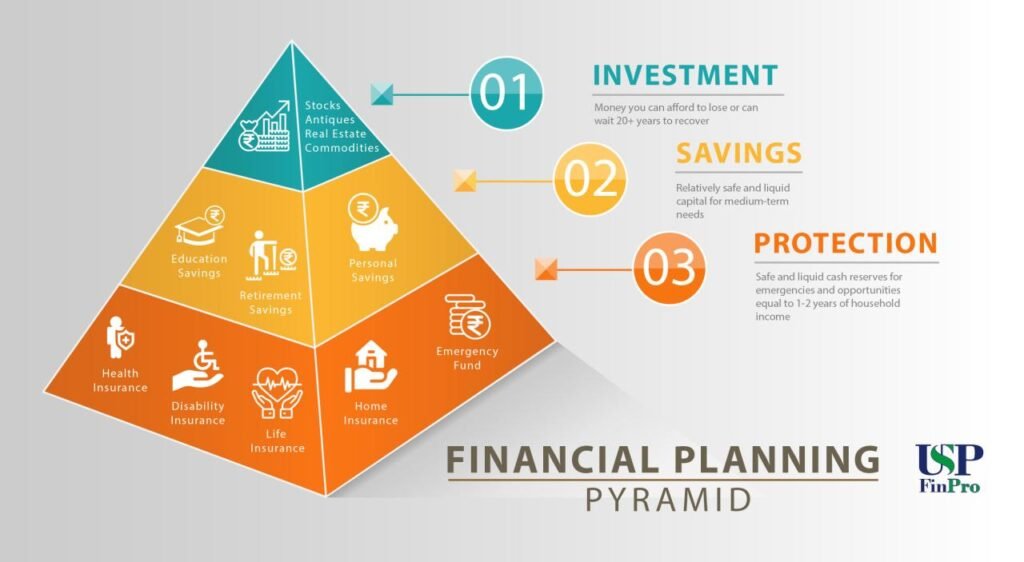
Gap insurance should not be evaluated in isolation. Its effectiveness increases when integrated into a broader financial plan.
Key integration considerations include:
- Asset depreciation profiles
- Financing terms
- Insurance coverage limits
- Overall risk tolerance
Holistic planning ensures that gap insurance complements, rather than complicates, financial strategies.
Common Misconceptions About Gap Insurance
Several misconceptions prevent individuals from considering gap insurance seriously.
- “I don’t need it because I have insurance.”
- “It’s only for irresponsible borrowers.”
- “It’s too expensive for what it offers.”
These beliefs often stem from incomplete understanding rather than objective analysis.
Regulatory and Contractual Considerations
Gap insurance products are subject to regulatory oversight and contractual terms that vary by jurisdiction. Understanding exclusions, coverage duration, and eligibility is essential.
From an executive viewpoint, transparency and compliance are non-negotiable aspects of responsible financial decision-making.
Timing and Duration of Gap Insurance
Gap insurance is most valuable during periods of high negative equity. As loan balances decline and asset values stabilize, the need for gap coverage diminishes.
This time-bound relevance reinforces the importance of aligning coverage duration with financial exposure.
Gap Insurance and Ethical Financial Advice
Ethical financial guidance requires recommending protection that aligns with genuine risk, not sales incentives. Gap insurance should be advised based on objective need.
As a CEO, I emphasize integrity in financial recommendations. Trust is built when protection serves the client’s interest first.
Executive Framework for Evaluating Gap Insurance
A structured evaluation framework includes:
- Assessing asset depreciation rates
- Reviewing financing terms
- Identifying periods of negative equity
- Evaluating premium affordability
- Integrating coverage into financial plans
This disciplined approach ensures informed decision-making.
Long-Term Impact of Gap Insurance
The true value of gap insurance is often invisible. When it functions as intended, it prevents financial disruption rather than creating visible benefits.
From a leadership perspective, avoided losses are as significant as realized gains.
Gap Insurance as Part of Financial Resilience
Financial resilience is the ability to withstand shocks without permanent damage. Gap insurance contributes to resilience by neutralizing a specific but impactful risk.
It allows individuals and businesses to recover quickly and continue pursuing long-term objectives.
Conclusion: The Financial Safety Belt
Gap insurance is aptly described as a financial safety belt. It does not prevent accidents, but it significantly reduces the damage when they occur.
As a CEO, my perspective is clear: comprehensive financial planning requires attention to both visible and hidden risks. Gap insurance addresses a vulnerability that many overlook until it is too late.
When integrated thoughtfully, gap insurance strengthens financial plans, preserves cash flow, and enhances confidence. It is not an indulgence or an unnecessary add-on—it is a practical, strategic safeguard in an increasingly leveraged financial world.
Word Count:
429
Summary:
Why is gap insurance considered as a financial safety belt? Simply put, it keeps you from being financially ruined when disaster hits your car. For example you are in this situation, you bought a late-model car three months ago using a car loan with a regular car insurance. The car costs $30,000 and you have already made three payments of $900 each month. Then, disaster strikes. An electric post falls and slams down on your car. The car was flattened to half its height.
I…
Keywords:
car loans, family finance, loan
Article Body:
Why is gap insurance considered as a financial safety belt? Simply put, it keeps you from being financially ruined when disaster hits your car. For example you are in this situation, you bought a late-model car three months ago using a car loan with a regular car insurance. The car costs $30,000 and you have already made three payments of $900 each month. Then, disaster strikes. An electric post falls and slams down on your car. The car was flattened to half its height.
Immediately, you reported it to the auto insurance company, which they in turn play with numbers, mileage, depreciation, market values, and other related stuff. After a couple of days, the adjustor informs you that the worth of your car at the time of the accident is $25,000. This is the amount that the auto insurance company will provide you. But the finance company that gave you the loan will still consider the car to be worth its original price. They also play with numbers, interest rates, taxes and license fees. Then they come up with the amount of $38,000. This is the amount that you need to pay them. If the auto insurance company releases the $25,000, where will you get the remaining $7,000? Your car is already a wreck but you still owe the finance company.
You need not face such a dilemma if you have a gap insurance. With the gap insurance, you can ignore the difference between the amount covered by the regular car insurance and the amount you owed the car loan company. This difference is called a �gap� and the gap insurance bridges it so that you need not rack your head for additional financial resources.
A car lease contract must also have a gap insurance. It is a feature that prevents you from draining all your finances. Some dealers who lease cars don�t offer a gap insurance. This is okay as long as they include a �gap waiver� in their lease contract. This waiver declares that you are no longer responsible for gap charges that may occur when your leased car is wrecked.
When you get a gap insurance, determine how much is offered in the gap policy. You should also know how much will be added to your monthly bill. A gap insurance, for it to be recognized, must be accompanied with comprehensive insurance policies that cover collision.
Sometimes, a gap insurance may no longer be needed if the terms in your regular auto insurance policy indicated that the company will pay off the full amount you owed from the car loan lender.




Tinggalkan Balasan